If you have downloaded a sleep app, used it for a week and then forgotten it, you are in good company. It is the most common story there is. The reasons tend to be the same few, and knowing them makes it easier to pick an app you will keep.
Reason 1: It gives you a score
A lot of sleep apps measure you. You wake up to a number and a chart showing how well you slept.
For some people that is motivating. For many others it has the opposite effect. A bad score first thing in the morning makes you feel worse, and at night you start worrying about tomorrow’s number. Trying hard to sleep well is one of the surest ways to sleep badly.
If tracking makes you tense, you do not need it. An app that helps you wind down is doing a different job from one that measures you, and the first is the one most poor sleepers need.
Reason 2: It asks for effort when you have none left
Guided meditations, breathing programs and sleep courses all work for the people who do them. But they ask you to concentrate and follow instructions at the one time of day when you have the least energy. On a bad day, the session is the first thing you skip.
The tools that last are the ones that ask for almost nothing. If all you have to do is press play, you will keep doing it.
Reason 3: The library is overwhelming
Hundreds of tracks sounds generous. In practice it means scrolling through options at midnight, and choosing is work. Many people end up playing the same two tracks and wondering what they are paying for.
A small set of things you like is more useful than a large catalog.
Reason 4: Nothing changes
The first week with a new app is interesting. By the third, it is the same screen and the same sounds, and there is no reason to open it apart from duty. Habits built on duty do not last.
What to look for instead
- No effort to start. One tap from opening the app to sound playing.
- No judgment. No scores unless you want them, and nothing that makes a bad night feel like a failure.
- Sound that lasts the night. If it stops after an hour, it may wake you. Look for looping or a gentle fade.
- A reason to come back. Something that changes or grows, so tomorrow night is a little different from tonight.
- A nudge at the right time. A reminder before bed, not a notification at noon.
How migg approaches it
We built migg for people who had given up on sleep apps, so it tries to avoid each of these problems.
There are no sleep scores. You pick a room, such as a rainy apartment or a cabin with a fire, and the sound plays until morning. There are only a handful of rooms, so choosing takes seconds.
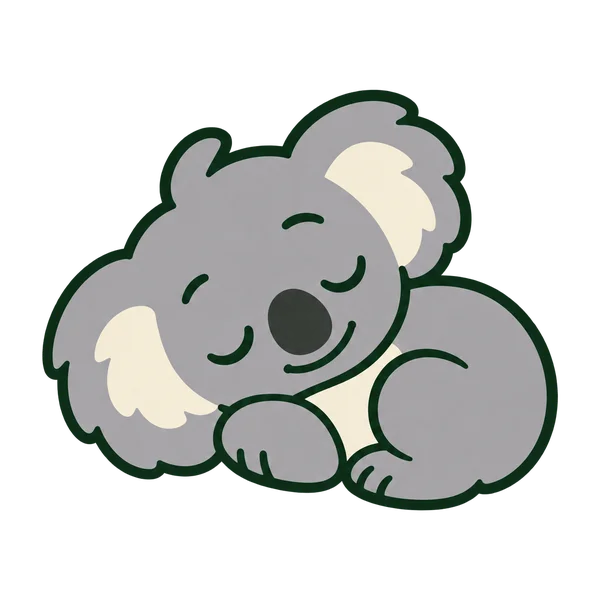
The part that brings people back is the koala. It falls asleep when you do, and the time you sleep turns into stardust that you spend on furniture for its room. Sleeping is the whole game, and you cannot do it wrong.
It will not suit everyone. If you love data, a tracker will serve you better. But if other sleep apps never stuck, it may be worth a try.
This article is general information, not medical advice. If sleep problems last for weeks or affect your days, please talk to a doctor.